Two words that have stayed with me
When I first started consulting, my strapline was just two words: Empowering Others. The business has grown and changed a great deal since then, but those two words have stayed with me.
Whether I’m running LM Strategy Group, working with clients, mentoring apprentices or volunteering as a Cub leader, my aim is the same. I want to help people become the best version of themselves they can be.
Over the years I’ve learned that mentoring isn’t really about telling somebody what to do. It’s about creating the conditions in which they can find out what they’re capable of, build their confidence and succeed for themselves.
Potential, opportunity and confidence
For me, empowering someone comes down to three things. Recognising potential: seeing something in a person that they haven’t yet recognised in themselves. Creating opportunity: giving them the chance to try, to contribute and, occasionally, to get things wrong. And building confidence, through encouragement, honest feedback and gradually letting them make their own decisions.
The three only work together. Recognise potential but offer no opportunity, and people become frustrated. Offer opportunity without support, and they become overwhelmed. Support people but never let them decide, and they stay dependent on you.
Potential isn’t always obvious, either. We notice the confident people, the ones who speak up first. But some of the most capable people I’ve worked with started out quiet. Their potential showed in other ways: consistency, attention to detail, a thoughtful question, a real willingness to learn. Part of a mentor’s job is to look beyond today’s confidence and qualifications to what someone could become.
Knowing when to step in, and when to step back
Managing, coaching and mentoring overlap, but they aren’t the same. Managing is about direction and expectations: here’s what needs doing. Coaching asks: how would you approach this? Mentoring takes the longer view: where do you want to go, and how can I help you get there?
In a small business, I can do all three with the same person in a single afternoon. The skill is knowing which one the moment needs. If someone is new to a task, or the risk is high, clear direction is the right call. As their experience grows, I try to move from “let me show you” to “what approaches could work?”, then to “what would you recommend, and why?”, and eventually to “I trust your judgement.”
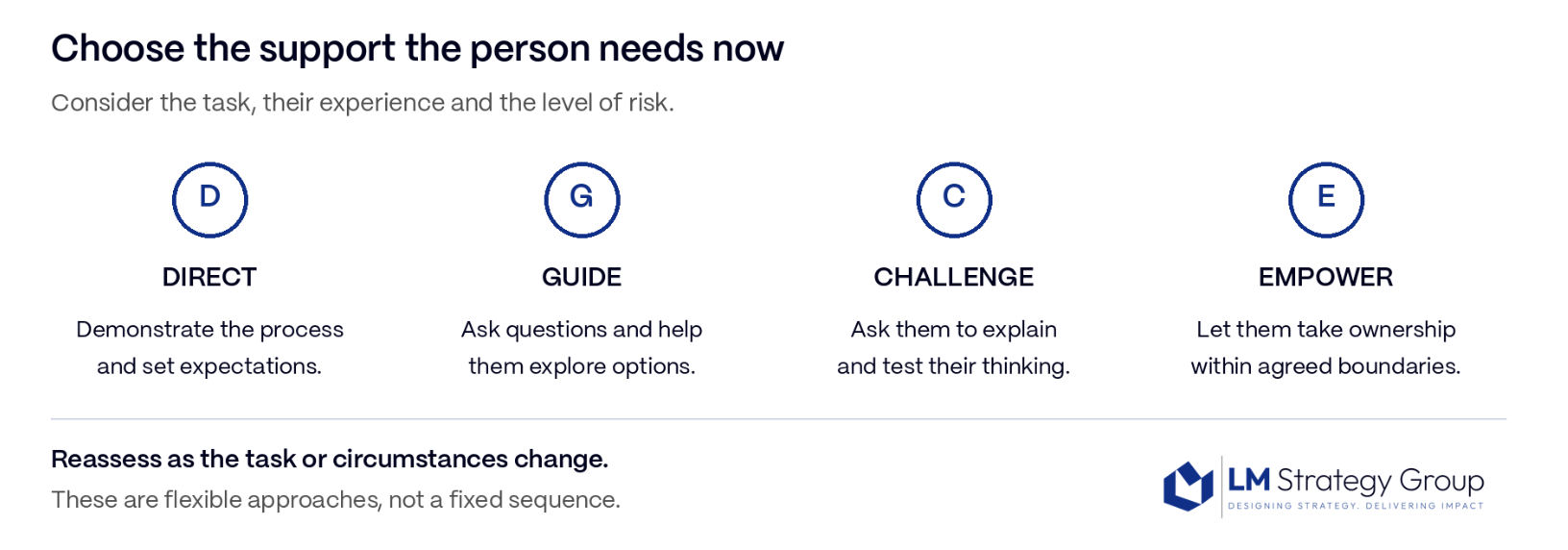
That isn’t a one-way journey. A confident person facing something unfamiliar may need more direction again. Good mentoring means matching support to the task, the person’s experience and the risk.
Five principles I try to live by
Protect the learning. If development only happens once everything else is finished, it never happens, because everything else is never finished. Treat it as an investment, not an interruption.
Give real responsibility. People learn by doing meaningful work, with the right support and authority, not by watching from the sidelines.
Create clarity and boundaries. People need to know what they’re responsible for, what they can decide for themselves and when to ask for help.
Give feedback without rescuing. When you’re busy, it feels quicker to fix things yourself. But every time we do that unnecessarily, we take away a learning opportunity.
Progressively let go. If someone needs exactly the same level of support after twelve months as they did on day one, it’s worth asking whether our approach is really helping them grow.
Ask, don’t tell
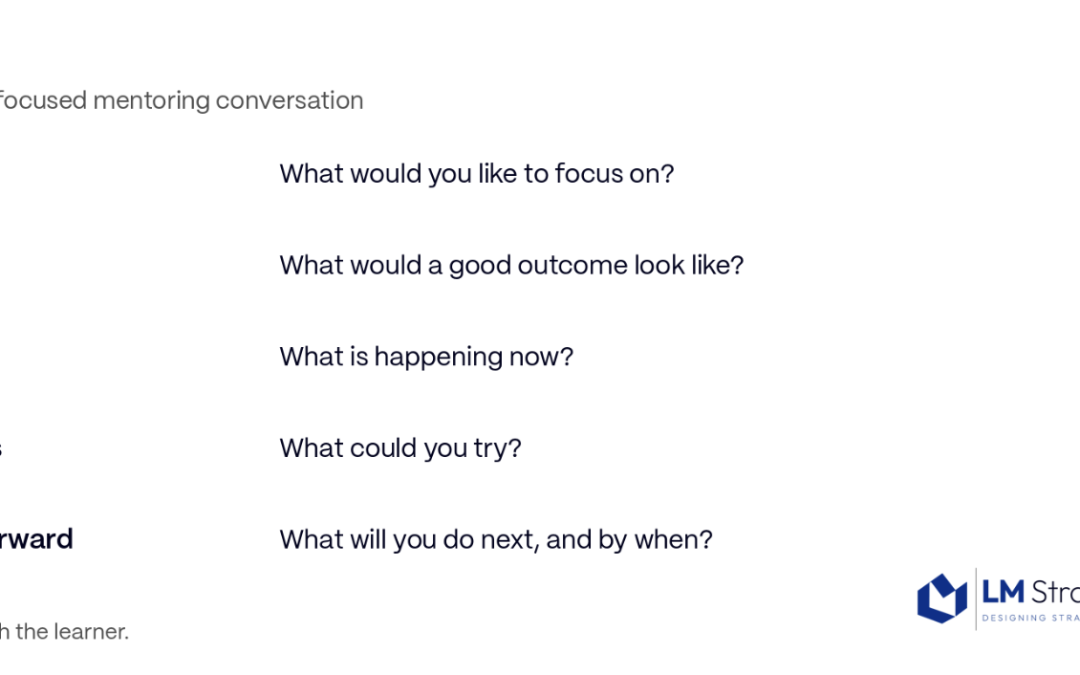
The hardest habit to break is giving people the answer. T-GROW is a simple structure that helps: agree the Topic, the Goal, the current Reality, the Options and the Way Forward. The important thing is that the other person does most of the thinking.
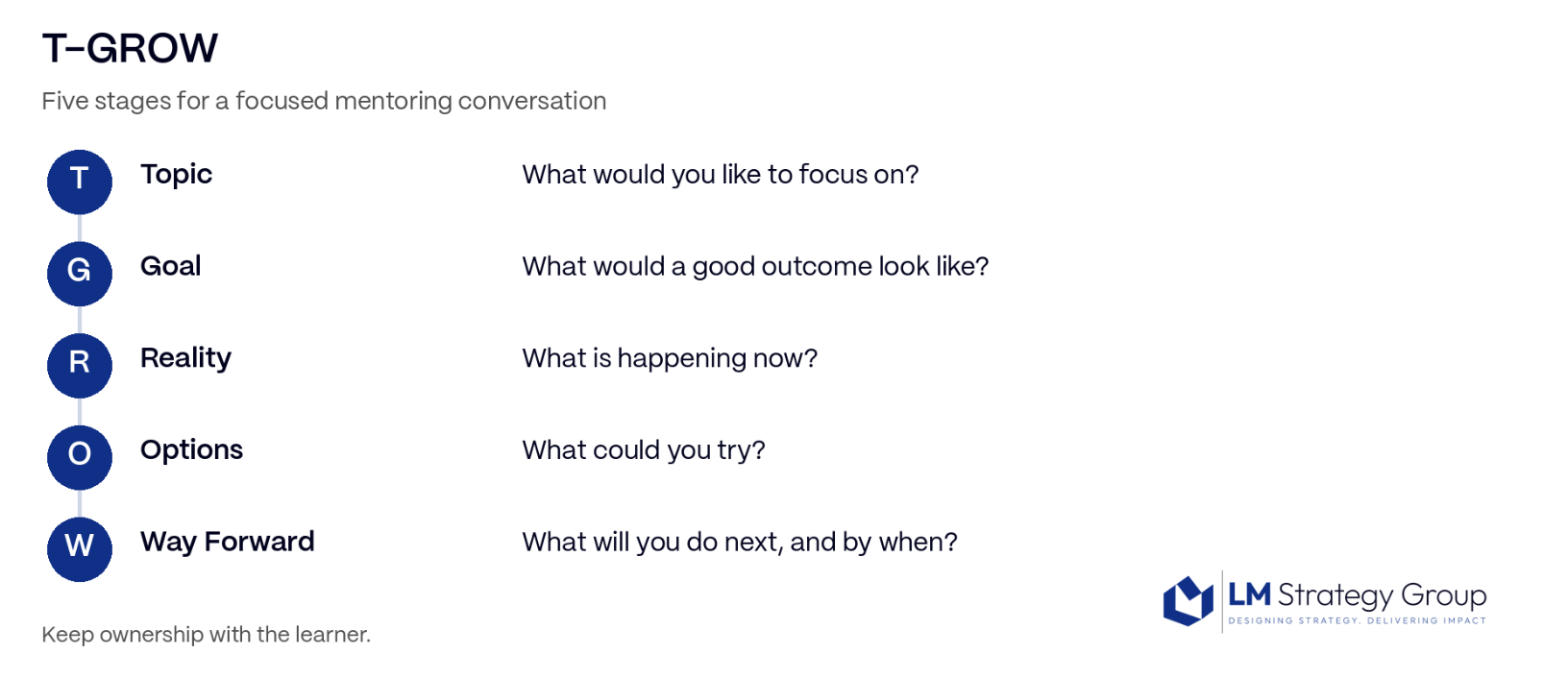
One of the most useful questions I know is simply: “What do you think we should do?” It’s remarkable how often someone already has a perfectly sensible answer and is really looking for reassurance, or permission to trust their own judgement.
Remove the fear, not the responsibility
If people are frightened of telling you something has gone wrong, you’ll find out later than you should, when it’s harder to put right. I would much rather someone came to me early and said, “I’ve spotted a problem and I’m not sure what to do.”
Over time, I’d like that to become: “I’ve spotted a problem. Here are two possible solutions, and this is the one I recommend.” That’s real progress, and it only happens if we respond to mistakes in a way that is proportionate, constructive and focused on learning. Empowerment doesn’t mean removing accountability. It means building capability within clear boundaries.
Empowered people. Stronger teams. Better businesses.
Like many founders, I started out involved in almost everything. But you can’t be everywhere, do everything or be everything to everyone. If every decision has to come through you, you become the limiting factor in your own business.
That’s what we’re working on at LM Strategy Group: moving from a business that relies heavily on its founder to a multidisciplinary team with the confidence and capability to deliver. That doesn’t happen just by recruiting more people. It happens by investing in them, trusting them and creating the conditions for them to succeed.
The more capable your people become, the less your business depends on you, and the greater its potential to grow.
One person. One action. One commitment.
I was honoured to be named Nottingham Trent University’s Apprentice Mentor of the Year 2026, and delighted when NTU’s organisers invited me to share this approach with other mentors in a workshop. The challenge I set them is the one I’d leave with you.
Think of one person you could help to develop. Decide one thing you’ll do differently: give them more responsibility, ask instead of tell, or simply step back and trust them a little more. Then do it within the next seven days.
When people grow, teams grow, organisations grow, and opportunities grow. For me, that’s what empowering others is all about.
Find out how we can support your business
Developing people is part of building a business that can grow with confidence. At LM Strategy Group, we work alongside leaders on executive leadership, strategy, facilitation and complex business problems, helping them agree a clear way forward and put it into practice.